My First Two Years as an MP
Manuela Perteghella
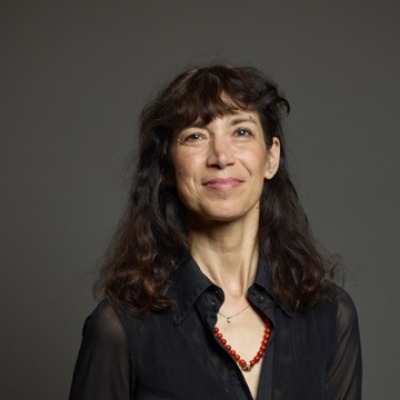
Manuela Perteghella is the Liberal Democrat MP for Stratford-upon-Avon and has been an MP since 4 July 2024.
Image source: official portrait, cropped.
Report on the Talk
Manuela entertained and informed the Society with descriptions of the life of an MP and of her role as the representative for the Stratford-upon-Avon constituency. She was elected as a Liberal Democrat in the 2024 general election.
In her previous career, she was a university lecturer and translator, specialising in drama. In the House of Commons, she is known as the ‘Shakespeare MP’. Her most recent achievement is the return of a direct train service, from London to Stratford and back, from 14 December 2026, to help visitors to go to the RSC theatre (amongst other things). There is further work to do to reinstate the previous direct service timetable, which would also help Stratford residents.
Tours of the Houses of Parliament are available for constituents. There is currently a two months’ waiting list. There are two tickets per month available for Prime Minister’s Questions (PMQs).
In the 2024 election over half of the MPs had never been elected before. Out of 650, 335 were new. Although some experienced MPs were lost, new ones also arrived with new ideas. There was an induction course, and new members were given a ‘buddy’. They had a tour of the building, and were told about the procedures. There were seminars and training about standards and behaviour, e.g., what expenses one has to declare, for the year before becoming an MP. They also have to set up a team in the constituency and are given a budget for equipment and staff. Manuela’s office is in the Arts House in Rother Street. The rent for this goes to the Town Trust, and thereby to community projects. There are constituency case workers and two members of staff in the House of Commons. Her office there is in Portcullis House, the very modern building near Parliament.
Manuela is on the Education Select Committee. This is cross party and politically balanced. It has the power to call witnesses to give evidence. An important issue is SEND provision. Manuela has also been a school governor. Manuela has learned that Parliament itself does not have much power compared with the Prime Minister (PM) and the government, as the Cabinet is chosen by the PM, not by a vote in Parliament.
Regarding selection of candidates, Manuela has found that it is harder for a woman to become a candidate. Also, a candidate needs to be asked three times to be put forward! In 2024 there were two other candidates, so there was a mini election. There were hustings and then the local party voted. There are 90,000 constituents but only a few people choose the candidate. Of the women in Parliament there are not many female Liberals. Manuela regards herself as a role model. From 1918 to the present, the number of women has risen to 40%. At this rate it will take another 130 years to achieve 50%! It’s also important to gain younger people’s interest in politics. It is not an easy life, and there are increasing concerns about personal safety, especially with the growth of social media which enables comments without context. Some MPs have bodyguards.
Manuela’s job has four elements – work on legislation, monitoring the work of the Government, representing her constituents, including local issues, and sitting on Select committees. She is also on the Environment Committee.
Generally, MPs are in Parliament on Mondays, Tuesdays and Wednesday and sometimes Thursdays. This is when legislation is debated and pushed through. On Thursdays, Fridays and at the weekends they are in their constituencies. In the next session of Parliament, on 2 September 2026, the postponed Representation of the People Bill will be debated. She is concerned about cutting political donations in the UK as well as from abroad. There is also a need to regulate social media, especially advertising and in relation to online safety. She is concerned about the low turnout in local elections. She also supports proportional representation rather than the current ‘first past the post’ system, and auto enrolment for electors.
The Autumn party conferences are important for policy formation. Her varied work involves consideration of bills, debates, questions, petitions and motions. Private Members’ bills coming up in September include Climate Change and the End-of-Life bill, which is returning with a new sponsor on 11 September. In answer to a question, Manuela said that she will vote for it. As a Catholic it has been a hard decision (it is a conscience bill), but she has taken note of people’s views – this is democracy. Manuela has a bill about rural waste, e.g. the problem of fly-tipping, and also one about social media, with regard to the dangers to children and corporate accountability.
To ask a question at Prime Minister’s Questions (PMQ) MPs have to take part in an electronic ballot. Manuela has had two so far. Otherwise, it is necessary to arrive very early, at 8 am, to reserve a seat, then return at 11.30 for prayers, or you will lose the seat! Then one bobs up and down, hoping to catch the Speaker’s eye! Questions can include raising relevant constituency issues (e.g., hospital beds at Shipston) and petitions, which can also be delivered on paper in person at the door of No. 10 Downing Street. Manuela considers PMQs to be adversarial and sometimes unpleasant! Generally, Parliament is collaborative, e.g. in committees.
Early Day Motions (EDMs) of particular concern to Manuela include vape shops, and the dangers of fire, especially in conservation areas.
There were several questions:
- Regarding the number of MPs, the chamber holds only 400 but there are 650 members. However, Manuela is against a reduction as then constituencies would then become much larger and less representative.
- The Warwickshire Local Government reorganisation consultation resulted in the decision to divide the county into two. Manuela agreed with this, as did four of the five MPs. There are still details to be worked out, especially regarding rural areas. A mayor for the whole area is one idea.
- Regarding the working day for MPs – the day starts quite late at 2.30pm in the chamber. However, there are many other jobs to do. There are a lot of facilities available to MPs as they have to practically live there. MPs generally arrive at about 10am for committee meetings. Manuela belongs to the Shakespeare Parliamentary Group, which meets on a Tuesday. On Wednesdays, in preparation for PMQs, there will be meetings with representatives of various bodies, such as charities.
It was a fascinating and detailed talk, and the Stratford Society are very grateful to Manuela for her time and effort.
Report by Helen Elliott, Publicity Officer